 |
|
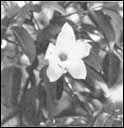 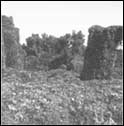 TOP: Water hyacinth MIDDLE: Rubber vine BOTTOM: Kudzu vine |
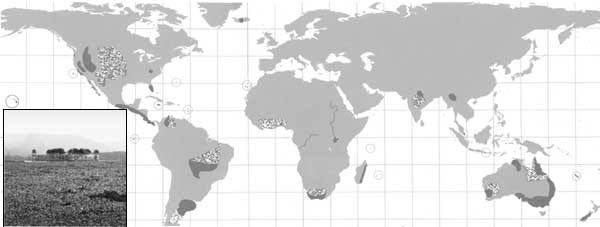
 This map, compiled by botanist Richard Mack, estimates the Earth’s surface on which vegetation is now dominated by alien species (blackened) and those areas on which alien plants are prevalent, but not yet dominant (stippled). Not only does the history of plant invasions span thousands of years, Mack argues,“their collective impact has been truly global.” In contrast to currently discussed forms of global change, plant invasions have already “wrought permanent consequences.” A South American native, the water hyacinth (Eichhornia crassipes) is one of the worst weeds in the world. Hyacinth populations can double in 12 days. In Jaipur, India, water hyacinths cover what should be open water. In Queensland, Australia, a noxious weed known as the rubber vine, Cryptostegia grandiflora, was introduced to gold mine areas. It has ruined grazing lands and threatened native forests. Kudzu (Pueraria thunbergiana) was first introduced to the United States at the Philadelphia Centennial Exposition in 1876. People planted it as a shade vine for porches and arbors. During the Depression, the federal government paid farmers to plant kudzu for erosion control. Now it overwhelms much of the southern U.S. It can grow up to a foot a day. | C O N T E N T S | H O M E | |