|
|
|
 |
Wanting It All: Making Connections at Frontiers -- reviewed by Kristin Harpster
|
|
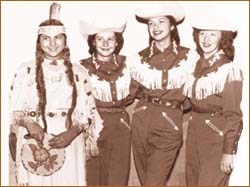
Each article, Sue Armitage notes in the introduction to the winter 1997 issue of Frontiers: A Journal of Women’s Studies, complicates a simple idea of what it means to be a woman, of what “woman” means. Published three times a year by the WSU Women’s Studies Program, with the WSU Press, Frontiers is fast building a national reputation for its commitment to breaking barriers between the academy and the community, as well as between disciplines. First published at the University of Colorado at Boulder in 1975, Frontiers moved to the University of New Mexico in 1990, then to WSU in 1995. From her first issue in 1996, editor Armitage, a professor of history and former director of the American Studies Program, has continued the journal’s focus on bridging the gap between the academy and the community. Armitage looks for language that will be accessible to all readers. Frontiers publishes articles with a long reach, writing that will reverberate in the community and the University, and which will continue or start a conversation instead of finishing it. Editorial intern Kirsten Patey, a doctoral candidate in the American Studies Program, believes that bridging the academy/community divide is part of the work of women’s studies, and asserts that to do that work a women’s studies journal should realize that “we’re not all in the academy theorizing.” Assistant editor Karen Weathermon, a doctoral candidate in the English department who is currently finishing her dissertation on Katherine Anne Porter, says that if the writing they publish is going to have impact, “it has to move outward.” Because a lot of work in women’s studies is about women in the community, she believes that Frontiers should hear those women’s voices. Still, Armitage and managing editor Pat Hart draw a troublesome, but real, conclusion about why certain topics do not always speak for and from both the academy and the community. Reproductive rights, for example. For Hart reproductive rights is an issue that applies to all women, but for many academic writers reproductive rights is “an old topic,” a problem Armitage attributes to the pressure on new faculty to produce original, or fashionable, material. Because reproductive issues are so important, Hart is very excited about an upcoming piece of writing by an abortion activist that effectively breaks down the academy/community divide by opening a “window on issues in accessible ways to otherwise theoretical issues and scholarly issues.” Just skimming the table of contents of a single issue elucidates the editors’ efforts to draw from a multitude of formats submitted by both academics and nonacademics such as personal essays, fiction, photo essays, and articles. One of my personal Frontiers favorites, and an apt example of how the journal meshes creativity, accessibility, and critical thinking, is WSU professor Joan Burbick’s 1996 photo essay on rodeo queens. Next to photographs of rodeo royalty, Burbick lays out terse prose questioning the relationship between posing and costuming and the 1950s construction of womanhood: “Can we all be queens, or is there room for only one? Is the queen a covert symbol of white womanhood?” Other pieces in this issue, which focuses on changing ideas of frontiers, are, to name just a few, a Web site collection of images by women artists worldwide, a cross-cultural analysis of sexual relationships in the 18th- and 19th-century American West, and an installation, originally shown at the Ellis Island Immigration Museum, of women’s dresses inscribed with text the artist collected in interviews with the women. These essays demonstrate the “all” that Hart refers to: “unlike some journals that let their scholars retreat into their disciplinary methodologies, we want it all; we don’t want just the methodology.” Perhaps the editors’ most important goal is to maintain and strengthen Frontiers’ commitment to multiculturalism. One way to do this is to publish writing that engages in a dialogue about race, class, ethnicity, and gender with other writing in the same issue, a strategy that Armitage calls “clustering.” When I asked why it was important to involve the University with the community—perhaps an obvious question, but I wanted to probe it further—Armitage, perhaps thinking about the paucity of faculty of color at WSU, said that without making an effort to reflect the nonuniversity community, “whether you mean to or not, you’re producing a white middle-class women’s journal.” For more information about Frontiers, call 509-335-7268.
|
|
